

Above is an image of the Vittorio Emanuele II Gallery located in Milan, Italy. This picture was taken by me two years ago when I visited Italy. Below is a stock image from Unsplash, taken by Allesandro Rossi five years ago.

Stock images like this are allowed to be used because of the licensing permissions that the owner agreed to when uploading the image to the stock image website. The owner of the image keeps ownership of the photo they took, but they allow other people to use the image under certain rules.
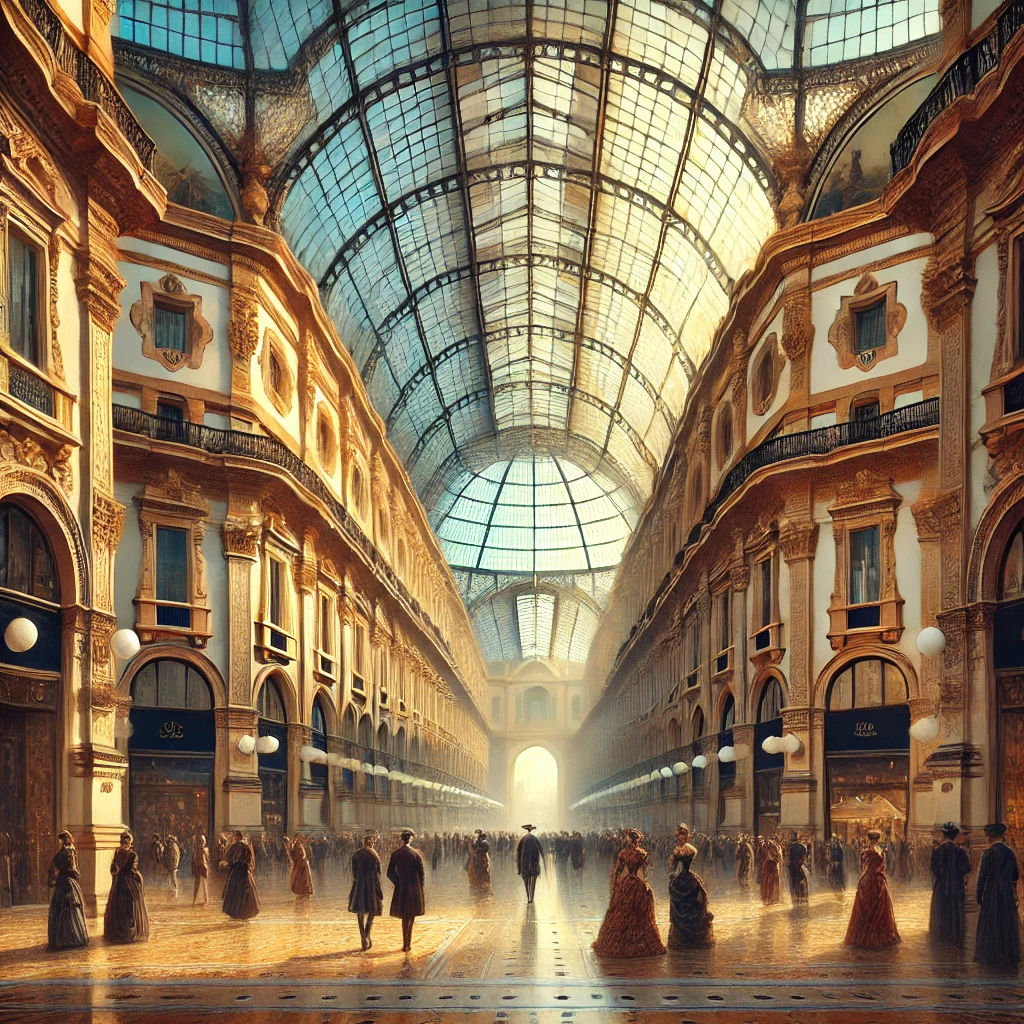
The third image seen above was generated from ChatGPT’s Dall-E, created to resemble the Vittorio Emanuele II Gallery seen in the previous images.
The article “Generative AI is a Minefield for Copyright Law” discusses the rapidly increasing advancements that are exposing flaws and gaps in current copyright frameworks. Copyright laws were originally designed with human creators in mind, looking to protect their original artwork from being incorrectly used or stolen by others. This framework is now becoming outdated, as AI models such as Dall-E and many others can now generate artwork in an instant.
One of the main focuses of this article is the issue of authorship. It is clear that when a human creates a piece of work, they are the author/owner of the piece. This ruling becomes complicated when discussing AI generated content, as the owner of the content, or author, is not clearly recognized. It can be argued that the user who created the prompt is the owner, or the creators of the model itself. No matter who you believe may be owed authorship, our current legal definitions do not cover these scenarios.
Another concern discussed in this article is how exactly the generative AI models came up with the content that they produced. AI systems are trained using data across the internet, even though much of it is copyrighted. For basic chat models such as Grok or ChatGPT, this is much less of a concern. For generative AI models such as Dall-E, the use of copyrighted images can heavily affect the original owners of the content.
Overall, the increase of generative AI models marks an important time for change when it comes to the frameworks of copyright law. These models have exposed issues that concern authorship and ownership that our current laws regarding copyright do not have capabilities to resolve.